
Sciatica describes pain that travels along the path of the sciatic nerve — from the lower back, through the buttock and down the back of the leg. It is a description of a symptom, not a diagnosis in itself.
Most people who experience sciatica describe it as a sharp, burning or shooting pain rather than a dull ache. It often affects one side only, and it can come with pins and needles, numbness or a feeling of weakness in the leg or foot. Sitting for long periods, coughing, sneezing or bending forward can make it feel worse.
Because the sciatic nerve is the longest nerve in the body, irritation anywhere along its route can produce symptoms some distance from the source. That is why leg pain often has more to do with what is happening in the lower back than with the leg itself.
What can cause sciatic pain
Sciatica happens when something irritates or compresses the nerve, or the nerve roots that form it. Common contributors include:
- A disc in the lower back that has changed shape and is pressing on a nerve root
- Narrowing of the space the nerve passes through in the spine
- Tight or irritated muscles in the buttock and hip that sit close to the nerve
- Reduced movement in the lower back or pelvis, often after a period of inactivity or prolonged sitting
- An awkward lift, twist or fall
Identifying which of these is involved matters, because it changes what will help. Two people with pain in the same part of the leg can need quite different approaches.
What usually helps in the first few days
For many people, sciatic pain settles over a few weeks. In the early stage, the aim is to stay as comfortable and as mobile as you reasonably can:
- Keep moving gently. Complete bed rest tends to make things stiffer. Short, frequent walks are usually better tolerated than one long one.
- Break up sitting. Stand and move every 20 to 30 minutes. Sitting is often the most provocative position.
- Change position often. Find the positions that ease the pain and use them, rather than pushing through movements that clearly aggravate it.
- Use heat or cold — whichever you find more soothing. Neither is a treatment on its own, but both can make you more comfortable.
- Ask a pharmacist about suitable over-the-counter pain relief for you.
You may find some of the mobility work in our exercise videos useful once the sharpest pain has eased. Start gently, and stop anything that increases pain down the leg.
When to seek advice sooner
Most sciatica is not dangerous, but some symptoms need prompt medical attention. Contact your GP or NHS 111 without delay, or go to A&E, if you experience:
- Numbness around the groin, buttocks or inner thighs
- Loss of bladder or bowel control, or difficulty passing urine
- Weakness in both legs, or rapidly worsening weakness in one
- Sciatic pain following a significant accident or fall
- Pain alongside unexplained weight loss, fever or feeling generally unwell
These are uncommon, but they are worth knowing about so you can act quickly if they appear.
How chiropractic care may fit in
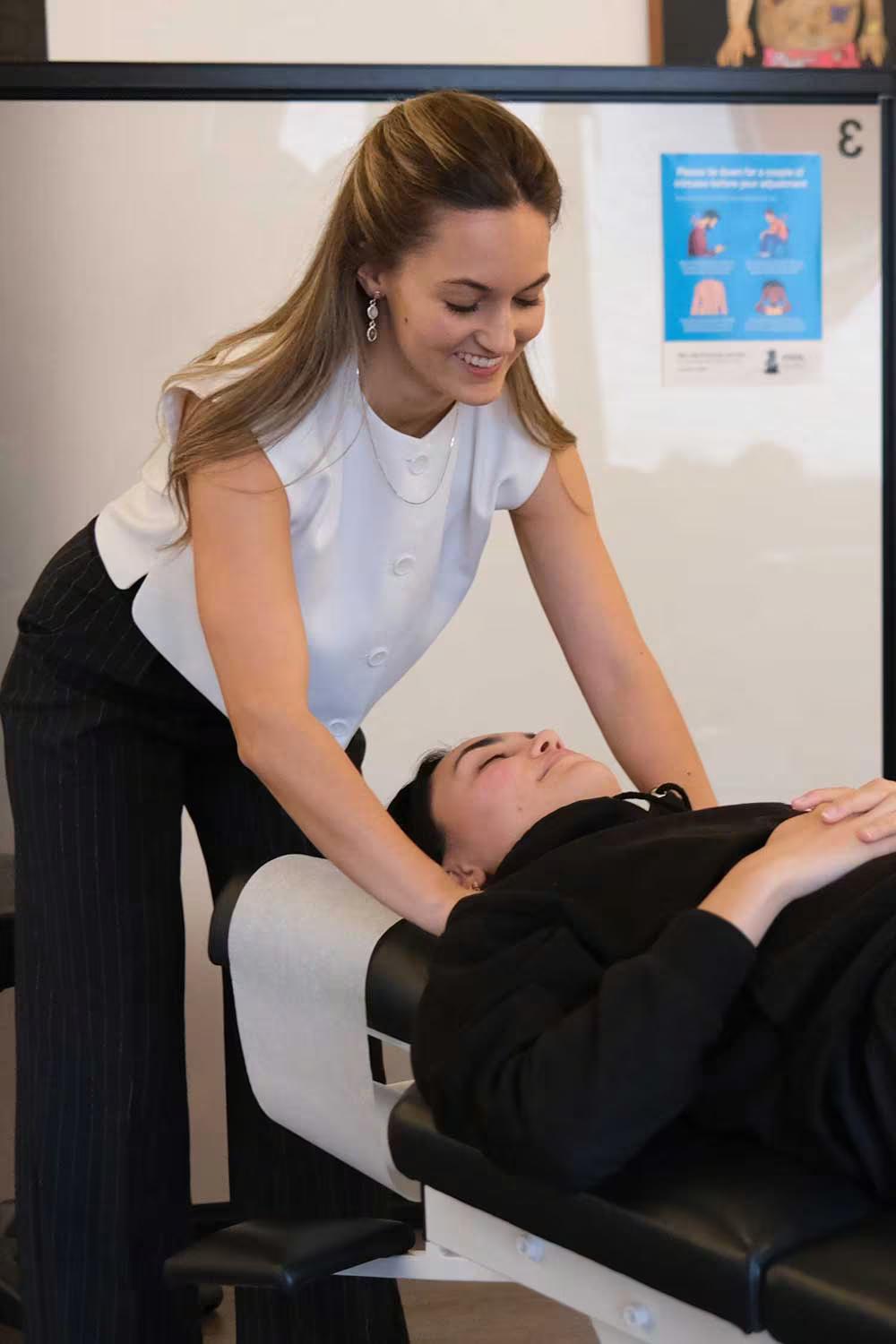
Chiropractors are trained to assess the lower back, pelvis and hips, and to work out how they are moving and where symptoms are likely to be coming from. A first appointment is mostly assessment: what you are experiencing, how it started, what makes it better or worse, and a physical examination of movement, strength and nerve function.
From there, care is tailored to what the assessment finds. It may involve hands-on work to improve movement in the lower back and hips, soft-tissue work, and advice on activity, positioning and exercises you can do between appointments. Where imaging would genuinely add something, we have on-site X-ray facilities at some clinics.
Chiropractic care is not a cure for sciatica, and no responsible practitioner can promise one. What an assessment can do is give you a clearer picture of what is going on, a plan for managing it, and an honest view of whether chiropractic is the right option for you — including referring you elsewhere if it is not.
Reducing the chance of it coming back
Once the acute pain has settled, the useful work is usually about load and habit rather than anything dramatic:
- Build up general activity and walking tolerance gradually
- Strengthen the hips, glutes and trunk so the lower back is better supported
- Review your desk and driving position — see our notes on posture
- Vary your positions through the day rather than holding any one for hours
If you would like your symptoms looked at properly, you can book an appointment at any of our London clinics. You can also read more about nerve pain and lower back pain.
This article is general information and is not a substitute for individual medical advice. If you are worried about your symptoms, speak to your GP or a qualified clinician.


