
Migraine is a neurological condition, not simply a bad headache. Understanding the difference matters, because it changes what helps and who is best placed to help you.
A migraine attack often involves moderate to severe head pain, frequently on one side, that can be made worse by movement, light, sound or smell. Many people also experience nausea, visual disturbance beforehand, or a period of fatigue and difficulty concentrating afterwards. Attacks can last hours or days.
Because migraine is a condition of the nervous system, it is managed rather than fixed. Most people do best with a combination of understanding their own pattern, medical input where appropriate, and practical changes that reduce how often attacks are triggered.
Migraine, tension headache and neck-related headache
Not all recurring head pain is migraine, and the distinction is useful:
- Tension-type headache is usually a dull, band-like pressure on both sides, without the nausea or light sensitivity typical of migraine.
- Cervicogenic headache is head pain that originates in the neck. It often starts at the base of the skull and spreads forward, and it tends to be provoked by neck positions or movements.
- Migraine tends to be more disabling, is often one-sided, and commonly comes with the additional symptoms described above.
These can overlap. Someone with migraine can also have a stiff, irritable neck that contributes to how often their head hurts — which is where assessment of the neck can be worthwhile even when the primary diagnosis is migraine.
Tracking your own pattern
One of the most useful things you can do costs nothing. Keep a simple diary for a few weeks, recording for each episode:
- When it started and how long it lasted
- What you had eaten, and how much water you had drunk
- How you had slept
- Stress, workload and screen time
- For those who menstruate, where you were in your cycle
- Any medication taken, and whether it helped
Patterns that are invisible day to day often become obvious over a month. That record is also genuinely useful for your GP.
When to see your GP
Migraine should be diagnosed by a doctor, and there are effective medical treatments — both for stopping an attack and for reducing how often attacks happen. Please see your GP if your headaches are frequent, disabling, or changing in character.
Seek urgent medical attention if you have a headache that comes on suddenly and severely, follows a head injury, or is accompanied by fever, a stiff neck, a rash, confusion, weakness, difficulty speaking, or visual loss. These need assessing quickly.
Where chiropractic care may have a role
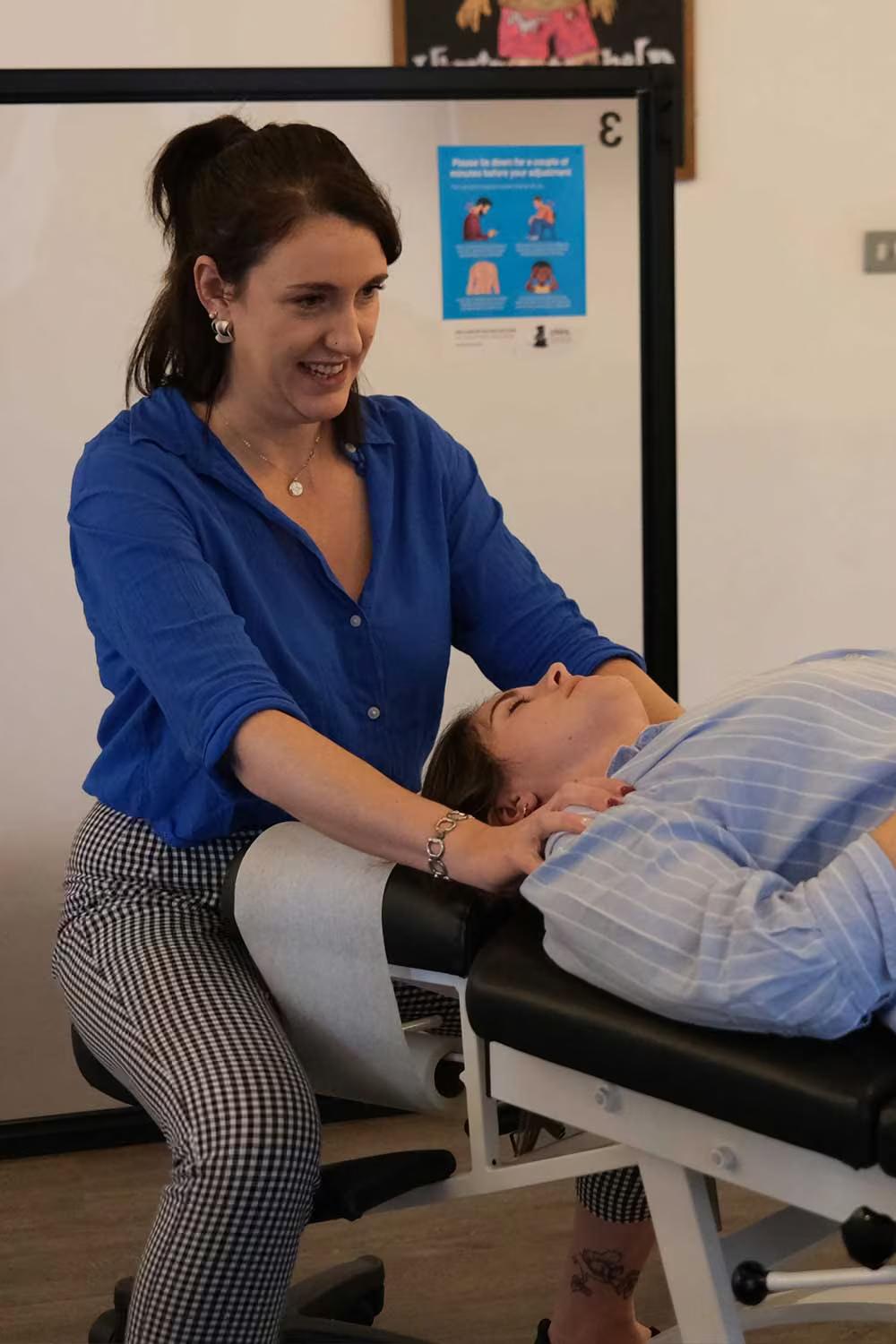
Chiropractic care does not treat migraine itself, and it is not a cure. What a chiropractor can assess is the neck and upper back — how well they move, whether the muscles are irritable, and whether that is contributing to your overall headache burden.
For people whose head pain has a genuine neck component, or who have both migraine and a stiff, painful neck, improving how the neck moves may make things more manageable. Care typically involves assessment, hands-on work to the neck and upper back where appropriate, soft-tissue work, and advice on desk set-up, screen height and sleeping position.
We will always be straightforward with you about whether we think we can help. If your presentation looks like migraine that needs medical management, the right advice is to see your GP, and we will say so.
Practical steps that often help
- Keep meal times and sleep times reasonably regular — both matter more than people expect
- Stay hydrated through the day
- Take regular breaks from screens, and check your monitor is at eye level
- Address neck and shoulder tension rather than working through it — see neck pain
- Review your workstation set-up; our posture notes cover the basics
- Build in a way of decompressing that you will actually do
You can read more about our approach to headaches, or book an appointment at one of our London clinics if you would like your neck assessed.
This article is general information and is not a substitute for individual medical advice. Migraine should be diagnosed and managed with your GP.


